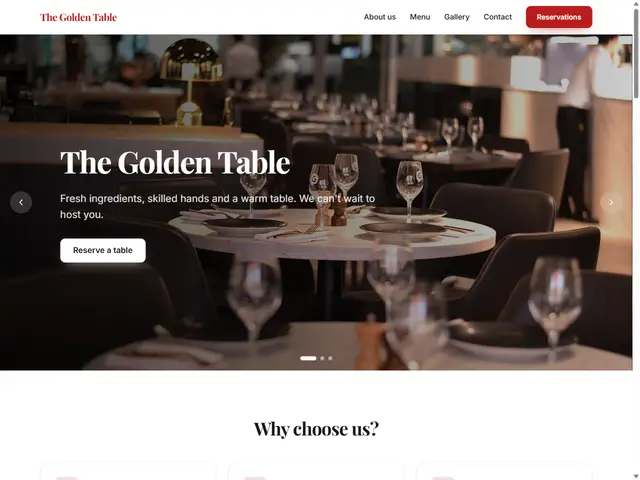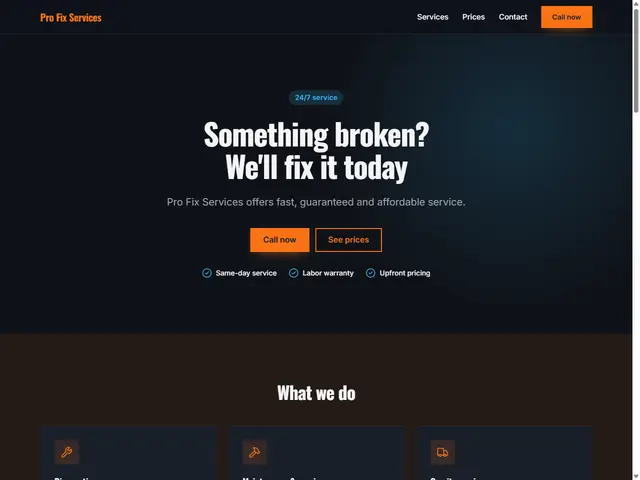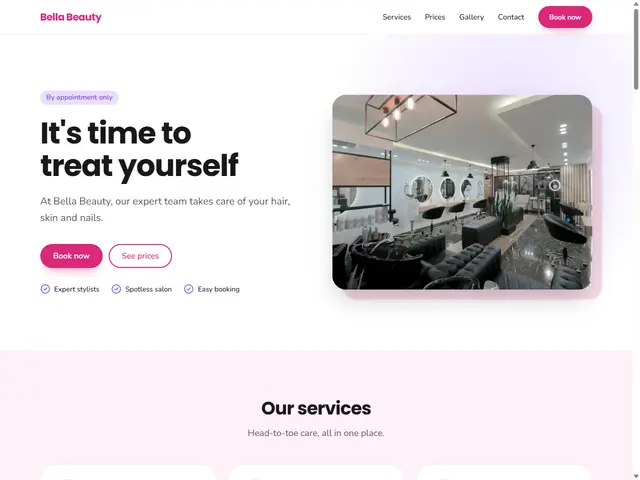
Hair & Beauty Salon
Services, price list, gallery and a booking call to action.
Last updated: 7 min readBy the BirSitem team
“Hair salon near me”, “emergency plumber downtown”, “brunch in Brooklyn”. A big share of your customers look for businesses like yours with searches like these, and the map results and listings that show up often decide whose phone rings.
This guide covers how local search works, how to set up your Google Business Profile, how to handle reviews, and why your website plays a key part. One thing up front: nobody can guarantee you the top spot on Google. But businesses that get the basics right do become noticeably more visible over time.
According to Google’s own explanation, local results are ranked mainly on three factors:
Two of these three are in your hands, and every step below aims to strengthen relevance and prominence.
Your Google Business Profile is the free listing that shows your business in Google Search and Maps. It’s the official way to get your business on Google Maps. You can create one, or claim an existing listing, at business.google.com.
Google cross-checks your business against information from many sources. Your name, address and phone number (often shortened to NAP) should match across your website, your Business Profile, your social media accounts and directory listings.
Small inconsistencies aren’t a disaster on their own, but together they erode Google’s confidence in your details and can send customers to the wrong place.
Reviews matter for prominence in Google’s eyes and for customers making a decision. The good news: most happy customers are willing to leave a review when asked.
You can show reviews on your website as well: BirSitem’s Testimonials block is a good place to feature real feedback you’ve received.
A Business Profile does a lot, but space is limited. Your website is the place you fully control, where you can explain your business to Google in detail. When the website link on your profile opens a good page, that builds trust with both Google and customers.
You’ll find where to set page titles and descriptions in the Google and sharing settings section of the docs. For a broader checklist, see our guide on what every business website needs.
Google Search Console is a free tool that shows how your site performs in Google Search: which searches you appear for, how often people click, and whether your pages are indexed.
If you’ve connected your own domain, add that address to Search Console. BirSitem already tells Google the canonical address of every page.
Google likes pages that answer questions well, and so do customers. The easiest way to decide what to write is to note down the questions you hear most on the phone.
A little content that is regular and genuinely useful beats dozens of pages written once and forgotten.
To see whether your changes are working, check three places:
To be realistic: no one can guarantee a specific position on Google. Be wary of offers promising “page one in a week”. A new site or profile usually takes weeks, sometimes months, to settle into search results. Businesses that stay up to date, consistent and backed by honest reviews rise over time.
If your Business Profile is live, the next step is making sure its website link leads somewhere good. With BirSitem you can start from a template for your industry and publish within minutes.
When you’re ready, create your free account and put a solid website behind your Google listing.
9 min read
What Every Salon, Restaurant and Clinic Website Needs (Checklist)
The essentials every local business website needs, sector-specific tips for salons, restaurants and clinics, the most common mistakes and a checklist to run before you publish.
7 min read
Do You Need a Website If You Have Instagram?
Instagram is great for getting discovered, but can it carry your whole business on its own? What it does well, where it falls short and how a website fills the gaps.
8 min read
How to Start an Online Store: A Beginner’s Guide (2026)
Everything to sort out before you sell online: your sales channel, legal basics, payments, shipping, product pages that build trust, and how to start small.